
 Give a Gift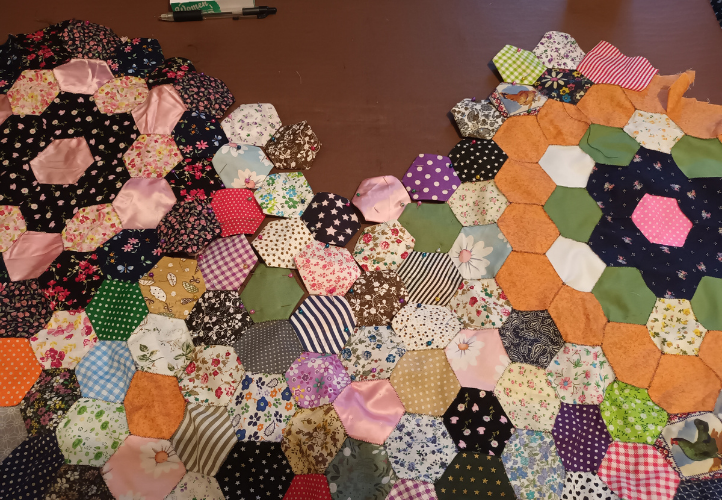
Main photo provided by Canva.
If you’ve ever heard quilters chatting about FPP or EPP and thought, Wait—what now?, you’re not alone. These two paper piecing methods pop up all over quilting blogs, pattern descriptions, and Pinterest boards. And while they sound like close cousins, they’re actually quite different.
One method uses a sewing machine and pre-printed foundations. The other relies on a needle, some paper templates, and a good excuse to settle down on the sofa. Whether you’re new to quilting or simply curious about exploring a new technique, this guide outlines what each approach entails, the pros and cons of both, and how to choose the one that best suits your style – or your stitching mood.
So, let’s start with the basics:
What Are FPP and EPP?

Photo by Ann Butler. This example of foundation paper piecing (FPP) can be found in Ann’s Northern Cardinal Paper Pieced Quilt Block.
FPP (Foundation Paper Piecing) is a machine-sewn technique where you stitch fabric directly onto a printed paper pattern. Once the block is finished, the paper is torn away. This method is ideal for creating crisp points, sharp angles, and intricate designs that would be difficult to assemble accurately otherwise.
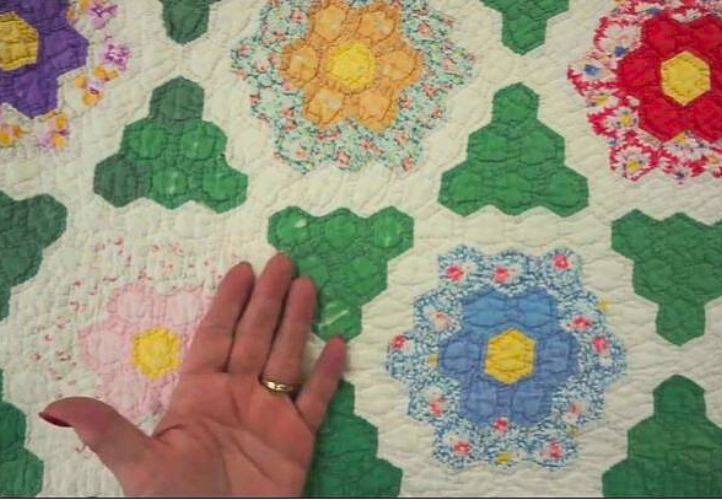
Photo by Ampry Publishing. The example of English paper piecing (EPP) can be found in our How to: English Paper Piecing video.
EPP (English Paper Piecing) is a hand-sewing technique. Fabric is wrapped around cardstock templates—usually hexagons, diamonds, or other shapes—then basted or glued in place. These shapes are then sewn together, usually with a whipstitch. EPP is perfect for portable, meditative projects and works especially well with repeated geometric shapes.
TIP! For both methods, you can use fabric from your scrap stash!
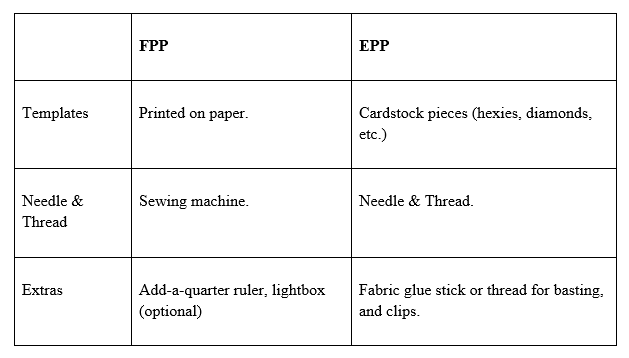
What Tools Do You Need?
Grab your fabric and see below what else you’ll need to get started with each method:
How Does Each Technique Work?
Here’s a quick step-by-step guide on how each method works.
FPP:
- Print out your paper pattern and instructions.
- Choose your fabrics and place each piece wrong side down on the back of the paper according to the pattern.
- Stitch along the printed lines through both paper and fabric, one section at a time, following the number order.
- Trim your seams, leaving a 1/4 inch seam allowance, and press as you go.
- When the block is complete, carefully tear away the paper, snip thread tails, and give it a final press.
EPP:
- Print your templates and trace them onto cardstock or appliqué paper.
- Cut your fabric pieces slightly larger than the templates (about 1/4″ seam allowance).
- Baste or glue the fabric around each template.
- Join your pieces together with a whipstitch following the pattern instructions.
- Once all your pieces are sewn together, you can remove the templates, which you can then reuse!
Note: You can buy pre-cut templates to skip printing and tracing and move straight to Step 2!
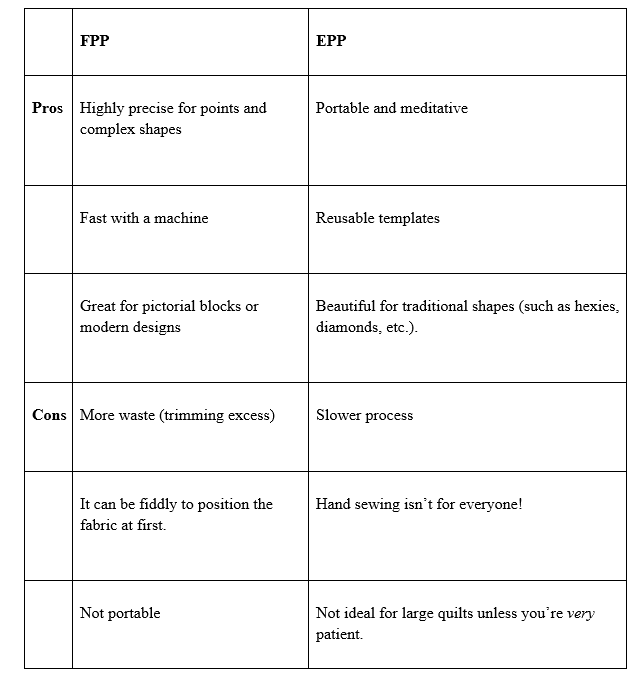
Pros and Cons of FPP vs. EPP
Here’s a quick overview!
Which Method Is Right for You?
So how do you decide which one you prefer?
- Want speed and precision? FPP might be your best bet.
- Prefer stitching by hand, or need a craft that’s easy to take on the go? EPP is your friend.
- Honestly? You don’t have to choose—many quilters use both depending on the project!
Try This!
The best way to decide is to try it out, so have a go at these:
- FPP Project Idea: A single precision block—star, house, or heart.
- EPP Project Idea: A hexie flower coaster or pincushion.
There are plenty of video tutorials online for both techniques if you prefer a visual guide.
Why Not Both?
We hope we have helped you decide…or not! At the very least, we have opened the door for you to get curious and try paper piecing on your own. So, FPP or EPP—machine or hand sewing, crisp angles or quiet evenings, quick wins or slow stitching joy? The truth is, there’s no need to choose just one. If you love clean corners and graphic designs, FPP is an excellent addition to your quilting toolkit. If you’re craving something calming and cozy to relax on the sofa, EPP might become your new favorite way to unwind. Either way, both methods open up beautiful possibilities—one stitch at a time.